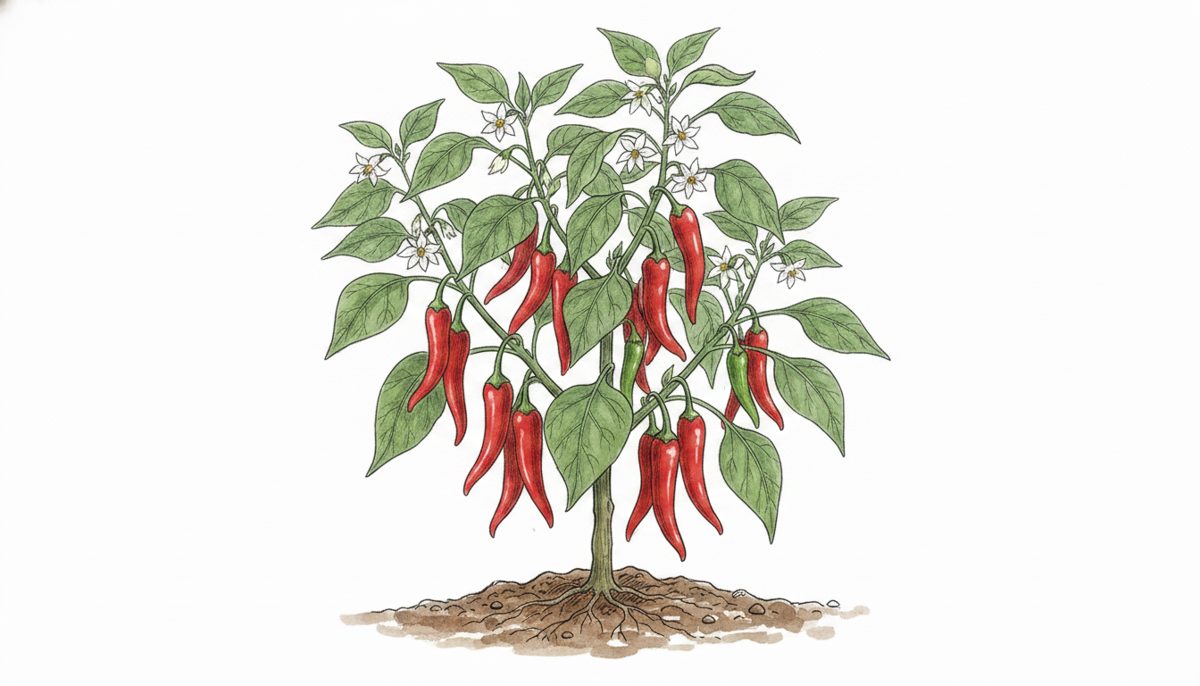
This is my homemade list of quick and easy chilli nutrient hacks. I’ve built this list over the years I’ve been growing chillies. It’s basically a list describing the nutrient deficiency symptom, and how I’ve learned to fix the problem with kitchen scraps or other household things I’m likely to have at home as fertilisers. It’s not very fancy, and not super precise, but these tricks have worked for my plants when they need an extra boost in a specific direction. I find it more charming than using store-bought fancy nutrient mixes — even though I do use prepared liquid nutrient mixes on a regular basis, as a general routine to keep the plants strong and healthy.
Problem: New leaves on the top of the plant are misshapen or look curly, while older leaves are still green. This is likely a sign of calcium deficiency. How to fix it: Eggshells contain a lot of calcium. Collect eggshells, wash them, grind them into powder and sprinkle around the base of the plant before watering.
Problem: Leaves on the top of the plant are light green, and leaves further down are yellow and shrivelled. This is likely a sign of nitrogen deficiency. How to fix it: Coffee grounds contain nitrogen. Mix into water, leave overnight, and water your chilli with this homemade compost tea the next day.
Problem: Leaves are yellow around the edges and tips, with yellow spots appearing. This is likely a sign of potassium deficiency. How to fix it: Banana peels contain a lot of potassium and add it to the plant as they break down. For outdoor chillies, chop up some banana peel and sprinkle it around the base of the plant. It’s also supposed to help fight off aphids, though I’m not sure about that part.
Problem: Leaves at the bottom of the plant turn yellow from the inside out, while the veins stay green. This is probably magnesium deficiency. How to fix it: Epsom salt is almost always good for chilli plants. It makes the roots grow better — I usually add one tablespoon to one litre of water when the plants are small, and later in the season I add a tablespoon directly around the base of the plant before watering.
Some other deficiencies I’ve seen but haven’t found kitchen fixes for: very bright yellow (almost white) new leaves with green veins, while older leaves stay unaffected — likely iron deficiency. And very dark leaves that fall off, which is probably phosphate deficiency. If you’ve got any suggestions for those, I’d love to hear them.